
Intrusive thoughts & harm OCD
Unwanted violent, taboo, or moral thoughts that horrify you, and the fear of what they say about who you are. Having a thought doesn't mean you want it.
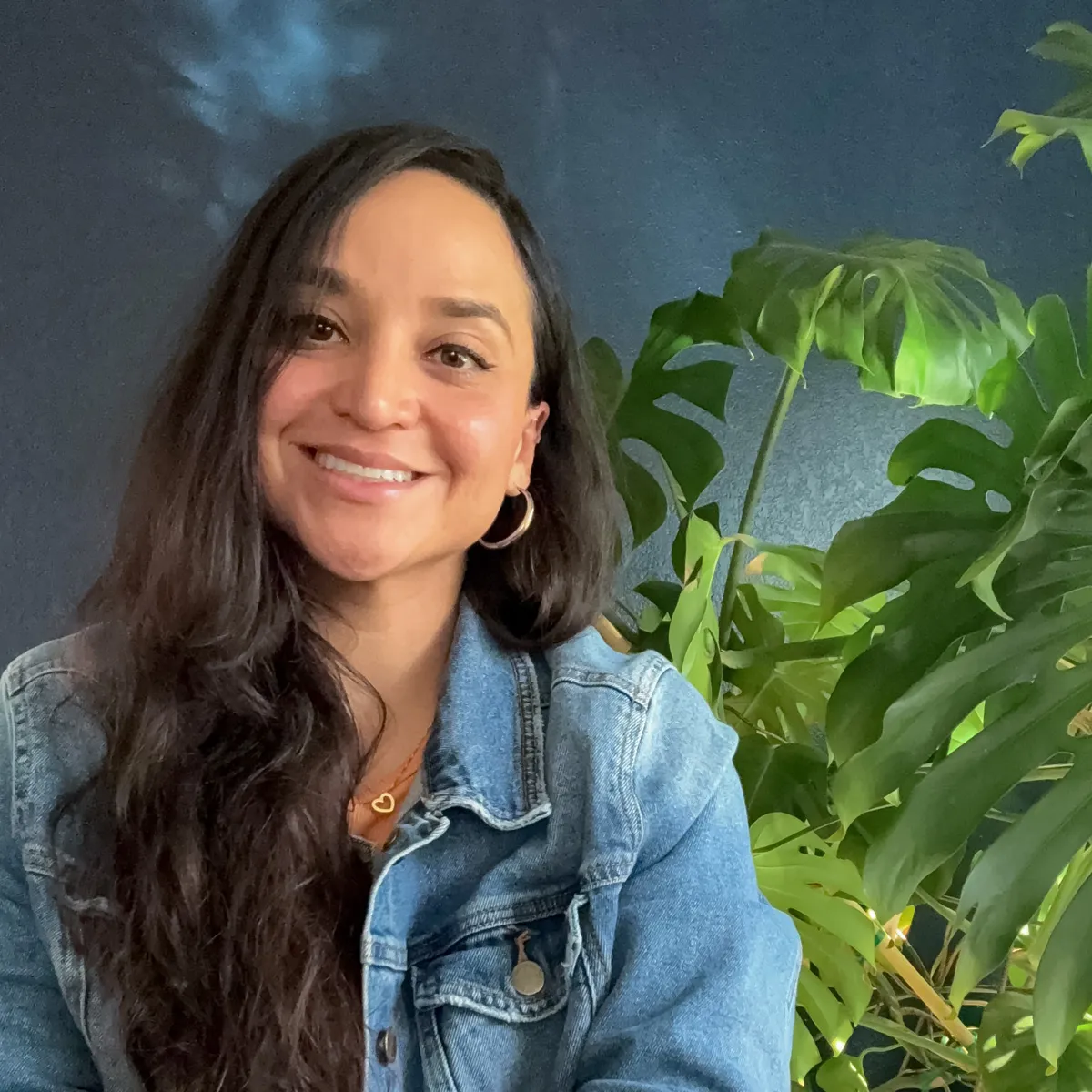
OCD & ERP SPECIALIST
Break the cycle of intrusive thoughts and compulsions with ERP, the gold-standard treatment for OCD. Warm, direct online ERP for Pure O, harm OCD, and relationship OCD.
DOES THIS SOUND FAMILIAR?
OCD is exhausting because it feels like you can think your way to safety. But the answers never stick, and the doubt always finds a new angle. You might…
You're not broken, and you are not your thoughts. OCD is a pattern, and patterns can change.
HOW ERP WORKS
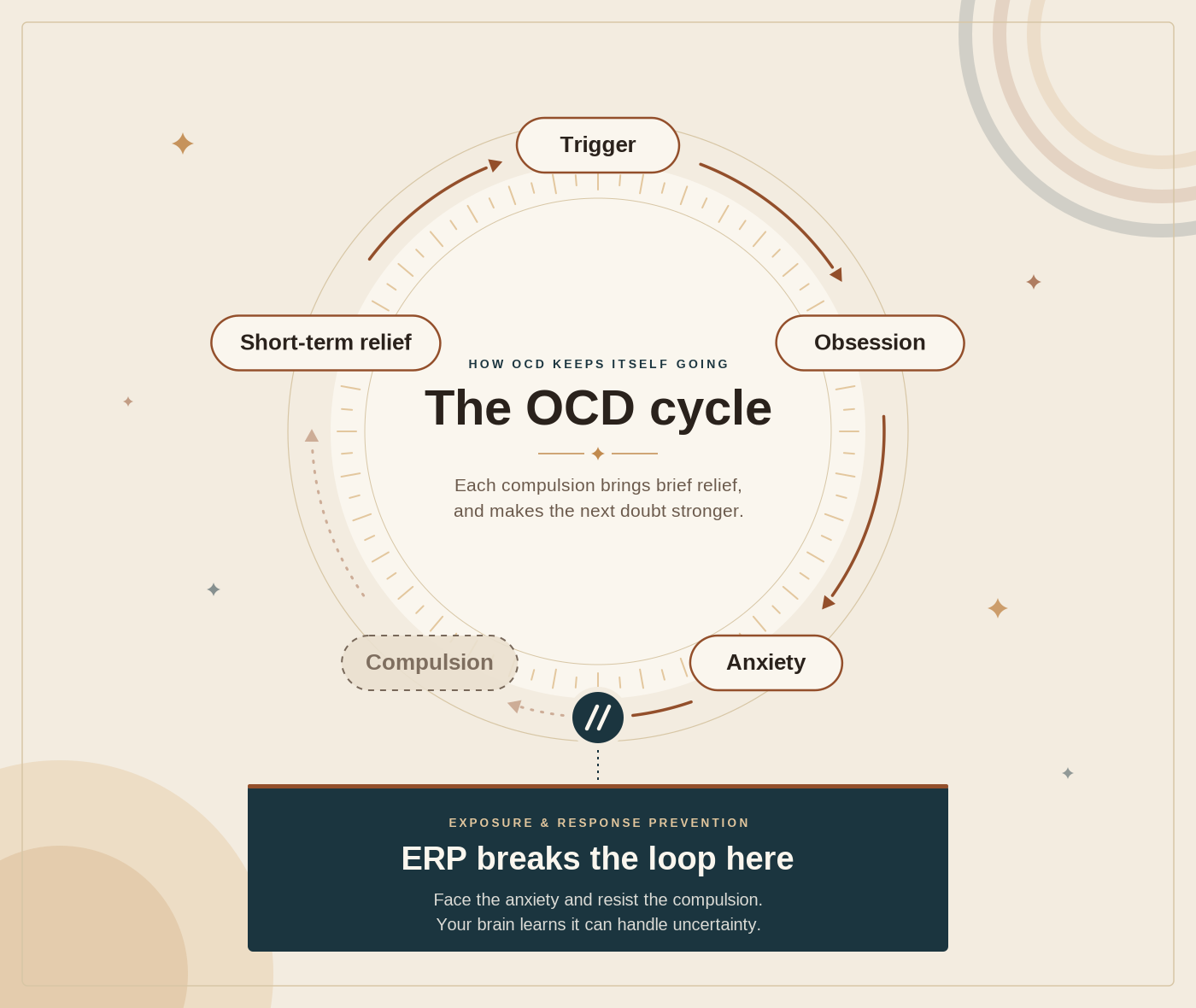
Exposure and Response Prevention is the clinical gold standard for OCD. Standard talk therapy can backfire, because analyzing the thoughts becomes one more compulsion. It brings short-term relief and keeps the cycle alive.
In ERP, we gradually and safely approach the triggers that make you anxious while you practice resisting the mental or physical compulsions. Over time, your brain learns it can tolerate discomfort and uncertainty.
ERP is backed by decades of research, and the American Psychiatric Association's practice guideline for OCD recommends CBT with ERP as a first-line treatment.
The goal isn't to never have an intrusive thought again. It's to stop letting those thoughts make your choices.
Certainty is the one thing OCD will never let you have. Freedom comes from discovering you can live a full life without it.
WHAT TO EXPECT
ERP is gradual and collaborative. You'll never be asked to face something you haven't agreed to. Here's how the work unfolds.
We identify your obsessions, triggers, and every compulsion, including mental ones like reviewing, analyzing, and reassurance-seeking.
Together, we rank your triggers from manageable to hard. You help set the pace and decide every step, so nothing comes as a surprise.
We face triggers gradually, in session and between sessions, while you practice not doing the compulsion.
The goal is for you to become your own ERP coach, able to meet new doubts on your own after therapy ends.
Online can be an advantage: many exposures work best at home, right where OCD shows up.
AREAS OF FOCUS
OCD tends to latch onto whatever you care about most. These are the themes I see most often. The content changes, but the cycle underneath, and the way ERP treats it, stays the same.
Unwanted violent, taboo, or moral thoughts that horrify you, and the fear of what they say about who you are. Having a thought doesn't mean you want it.
When the compulsions happen in your head: reviewing, analyzing, mentally checking, or seeking reassurance. ERP treats these just as directly as visible rituals.
Constantly checking your feelings, questioning your partner, or wondering whether this is the “right” relationship, and reassurance that never lasts.
Fear of germs or illness, checking locks and appliances, or repeating and organizing until things finally feel right.
OCD is defined by a pattern, not a theme. If your intrusive thoughts aren't listed here, ERP still targets the same cycle.
OCD and trauma often overlap. EMDR can help process what's underneath, alongside ERP.
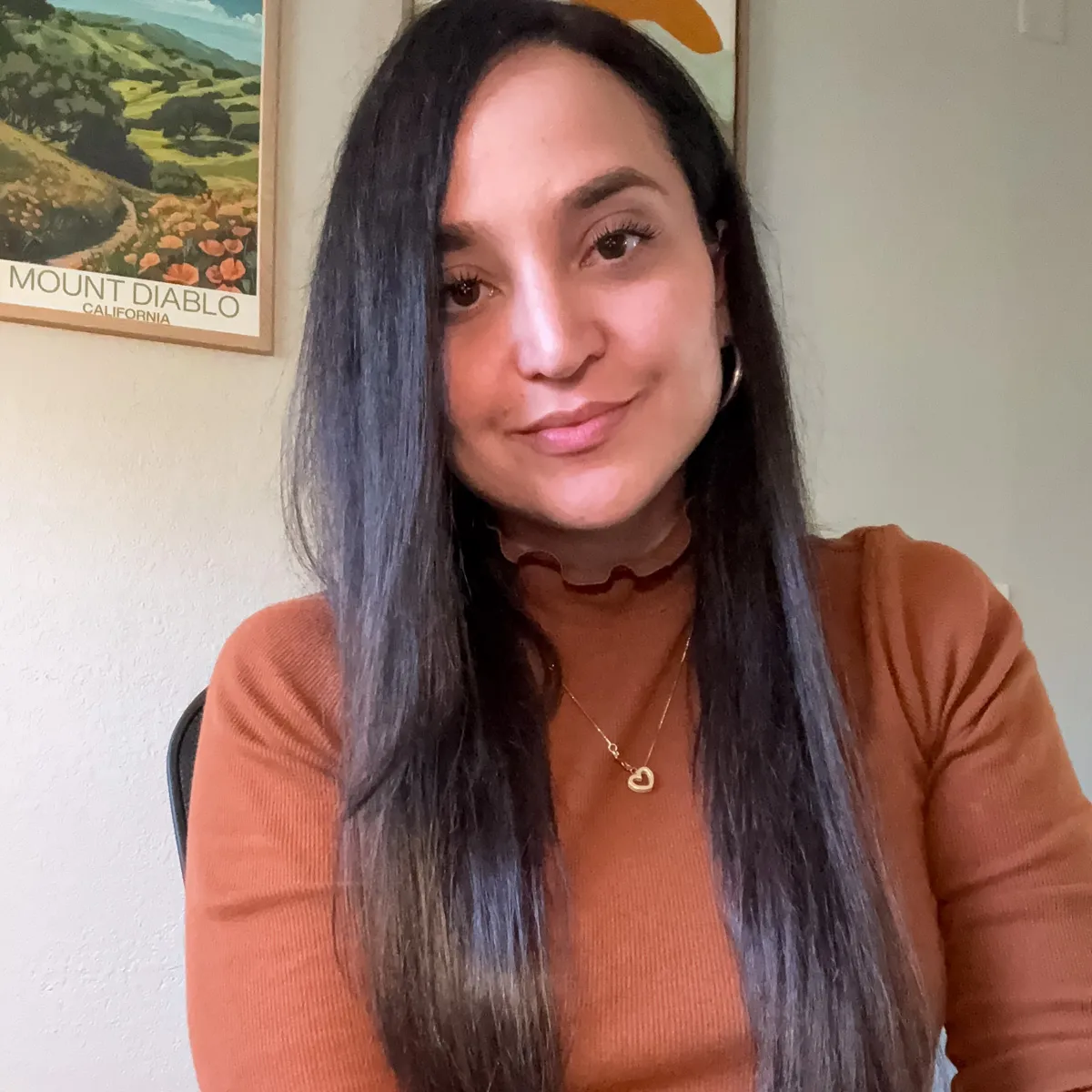
YOUR OCD & ERP THERAPIST
I'm a Licensed Marriage & Family Therapist (LMFT) and OCD therapist with over ten years of clinical experience and specialized training in ERP and ACT. I specialize in intrusive thoughts, harm OCD, Pure O, and relationship OCD (ROCD), and I work with clients anywhere in California by secure video. I know how much courage it takes to say an intrusive thought out loud. Nothing you share will shock me, and nothing you share defines you.
RATES
PRIVATE PAY
Cards, HSA, and FSA accepted.
PPO PLANS (OUT-OF-NETWORK)
Many PPOs reimburse a portion once your deductible is met. Mentaya files your claims automatically, so there's no paperwork on your end.
QUESTIONS ABOUT ONLINE ERP THERAPY
No. Many people start therapy unsure if what they're experiencing is OCD or severe anxiety, rumination, and intrusive thoughts. You don't need a label beforehand. We'll look at the patterns together and figure out the best approach for you.
No. ERP does involve choosing to feel some discomfort, because that's how your brain learns it can handle uncertainty. But we build your plan together and move gradually, and you're always part of deciding the next step and the pace.
Look for an OCD specialist trained in ERP. Well-meaning therapists sometimes respond to intrusive thoughts by analyzing them or offering reassurance, which can quietly feed the cycle. An ERP therapist knows how to spot mental compulsions, won't be shocked by what your mind throws at you, and helps you respond to the thoughts differently instead of trying to argue them away.
ERP translates well to video, and doing exposures at home, where OCD actually shows up, can make the work more practical. My practice is online only, so I can work with you from anywhere in California. We'll talk about fit during your free consultation.
It's short for “purely obsessional.” It describes OCD where the compulsions are mostly mental, like reviewing, analyzing, or seeking reassurance, rather than visible rituals. Harm OCD and relationship OCD often look like this. ERP treats mental compulsions just as directly as visible ones.
Yes. Relationship OCD often looks like constantly checking your feelings, comparing your relationship to others, or asking for reassurance that your partner is “the one.” Each check brings a moment of relief, then the doubt comes back. ERP helps you stop checking your feelings and auditing the relationship, so you can actually be in it.
It depends on your symptoms and how often you practice between sessions. We'll track your progress together so you always know where you stand.
I'm an out-of-network provider, so I'm not part of any insurance network. If you have a PPO plan, you may be reimbursed for a portion of each session once your deductible is met. PPO plans from carriers like Anthem, Aetna, Blue Shield, Cigna, and UnitedHealthcare often include out-of-network benefits, but coverage depends on your specific plan. HMO and EPO plans usually don't. I partner with Mentaya, so your claims are filed for you, and we can check your benefits before we start.
Start with a free, no-obligation 15-minute consultation. Ask your questions, share what you're struggling with, and see if ERP feels like the right fit.